Colour Therapy – eGurukul

Colour is power which directly influences soul 

Light is one of the  integral part of life forms in planet earth. We are exposed to different colours through light on a day to day basis. The colours is one of the easiest tool to use for therapeutic purposes and spiritual practices.  

In this egurukul session, you will be learning to decode each colour and healing properties associated to body and mind. Do come and join us for the online live session for the deeper understanding of influence of each colour and transform yourself into colour healer!  

PS. This is not Art therapy. 

What is in store for you? 

Colour Therapy-Enhance your interpretation of colours   

Topics to be covered: 

  • Decoding of colours 
  • Curative properties of each colour associated with body and mind 
  • Energy balance of the body based on physical, emotional, spiritual or mental levels. 

Date : 8th, 9th and 10th June, 2020 

Time 5 p.m. to 7 p.m. 

Where Online-egurukul Session 

Avail recording of this past event : https://www.hlp.world/challenge-page/colortherapy

CONTACT : +91 95135 80222 ( Mrs. Minu Amar) 

Recordings

https://youtu.be/StSeRfDL_E8

If you have trouble seeing the video, please click here

https://youtu.be/SbeKV_88jFY

If you have trouble seeing the video, please click here

https://youtu.be/TFEBmQR779w

If you have trouble seeing the video, please click here

Types of Schooling- Panel Discussion – Live on Facebook

Awakening the Inner Genius

Unlike our childhood, where we grow with limited options, today’s children have plenty of choices, right from birthing to schooling. The evolution across the globe has brought in diverse choices for current generation from birthing to schooling compared to the limited opportunities in the past. The modern approaches have established their own unique theories to the child development.

 As society is trying to adapt to changes, schools are also trying to unlock the child’s potential in their own way. The question is, did we really unlock the true self of a child? Or if our kids are being experimented in new concept schools? Which schooling method suits certain kids?

Join us for the heart to heart discussion with various parents from different types of schooling. Let us learn from their experience, thought process and truth! 

Key takeaways: 

Did you really unlock our child’s potential?  

What are the various schooling methodologies? 

Does the School meet actual needs of the child? 

Which is the best method for our child? 

Speakers: 

Unschooling – Ishani 

Montessori – Harini Karthik

Mainstream – Tanuja Jitesh

Waldorf – Smitha Dwivedi 

Homeschooling – Preetha 

Event date: 27th June, 2020 

Time: 9am – 11am

Watch this event recording: Facebook

CONTACT : +91 95135 80222 ( Mrs. Minu Amar) 

Art of Introducing Books to Children – Lockdown Webinar Series

By Divya Nadiyanselvam


Divya Nadiyaselvam is a curious learner, mother of two beautiful souls. She has played a very important and significant role in lot of areas for the HLP Community . Her contribution in the area of Translation of ancient scripts is remarkable.She is also a passionate follower of HLP Community .

 One of the greatest gifts adults can give to their offspring and to the society is to read out to children.Discover the Magic of Reading and Story Telling on Children’s developing Brain  

 Topics covered in the Webinar:

Benefits of introducing books and stories to kids

Tips to introduce books at an early age

Enable kids to read on their own and develop their love for reading

Available resources

Date 13th June

Time 9am to 10 am ( IST) 40min session, 20min Q&A

Place : Facebook Live

Enrollment Link: https://tinyurl.com/ybhrvzqu

CONTACT : +91 95135 80222 ( Mrs. Minu Amar) 

Understanding Dreams Series – v3 -Webinar

Unlock the hidden messages from your Subconcious Mind through dreams

Dreams is one of the enchanting and enigmatic subjects addressed by every culture and science. Our Hindu mythology and philosophy have numerous findings and age-old wisdom related to this mystifying topic.

Dreaming is a bridge between our conscious and unconscious mind that allows travelling back and forth between what we think we know and what we actually know. Most of us think that dream analysis requires stringent rules to follow but the truth is that there are no prescriptions or written formula to decode dreams.  

This being said, dreams play a significant role in human psychology and you are going to understand what dream is, how you could direct it to our advantages, etc. in this webinar.   We are here to help you journey through your dreams and understand the hidden codes they are trying to convey you.

Understanding Dreams v3 – What is in store for you?

After a successful Series 1 of Decoding Dreams,and Series 2 of learning auspicious signs, Yantra, Tantra this Webinar will help you to learn and practice how to manifest, time travel and other various remedies in our dreams.

This session carries you through into
  • Decoding many more auspicious signs in your dreams
  • Ways to travel time in dream!
  • Protecingt from Black Magic using dreams!
  • Remedies for bad dreams!
  • … And  Much more as time permits
Eligibility
  • People who are able to notice good signs at dreams and have implemented the Mantra & Yantra taught in Dream 2.
  • People who have done Dreams 1 + able to decode at least one dream or able to get into the meditative state of one dream.

Note:

  • People who have not done Dreams 1 and Dreams 2, can enroll for recorded version now. And join the dreams 3 live or recorded version later.
  • The contribution is Non-refundable. In case, if you missed the registered event due to personal reasons, the contribution can be used in the next event. Else it will remain lapsed.

Date : 5th July 2020

Time : 9 a.m. – 12 p.m. (IST)

Venue : Online Webinar from the comfort of your home

Avail the recording of this past event: https://www.hlp.world/challenge-page/decodingdreams3

Contact : +91 95135 80222 (Mrs. Minu Amar)

“Who looks outside, dreams; who looks inside, awakes.” Carl Jung


https://youtu.be/dpzJiAtPyik

If you have trouble seeing the video, please click here

Traditional Kokum juice to beat the summer heat

We might not like the summers due to the heat but we all do love the fruits that we get in this season, don’t we? This season, the nature gifts us with most of our favourite fruits like mango, jamun, watermelon, muskmelon, bael fruit, kokum, to name a few. So when the summers are hottest and draining what do we do? Use one of these super fruits to cool down our body. Here is one such recipe that is healthy, cooling and tangy+tasty and so it can be enjoyed by kids and adults alike.

In our group we often discuss about various holistic ways to maintain good health. Thus, it is important to replace tamarind in our kitchen with naturally grown kokum to balance various doshas in the body.

Learn why it is important to replace tamarind from kitchen to Kokum by clicking on the below link.

https://youtu.be/pXuPszQnSKM

Here I share the recipe of Kokum juice. I have prepared thick syrup of Kokum that can be consumed by diluting in water as juice whenever thirsty. This can also be stored in the refrigerator for over 2 months.

Ingredients:

  1. Traditionally grown Kokum from Konkan belt (as a trusted source we recommend (https://www.hlp.world/store/healthy-food/spices-masalas/kokum-tamarind) – 1 large cup
  2. Natural black pepper – 1/2 teaspoon
  3. Himalayan pink salt – 2 teaspoon
  4. Jeera – 1 teaspoon.
  5. Natural sugar/brown sugar/palm sugar – 500 gms – 750 gms depending on the sweetness of the sugar.
  6. Water – 2 cup

Recipe:

  • Wash and soak the Kokum for 3-4 hours in 3/4 cup of warm water.
  • Grind the soaked Kokum into fine smooth paste. The consistency of the paste must be thick and not watery.
  • Now, into the paste add pepper, salt and jeera and grind it smooth.
  • Take 1 cup of water in a vessel, add sugar and the ground Kokum paste and boil it on a stove.
  • Boil the mixture for about 10-15 mins until the syrup turns thick.
  • You can test the consistency of the syrup by taking a drop of the syrup between thumb and index finger as shown in the picture below. The syrup consistency must be of one thread.
  • Turn the flame off and let the Kokum syrup cool down.
  • Now sieve the syrup well to obtain a thick liquid syrup.
  • The kokum concentrate is ready for use.
  • To make Kokum juice, add 2-3 tablespoons of Kokum syrup in a glass and add cold water (best is the water cooled in an earthen pot)
  • Serve in earthen cup for the extra rustic touch.

Important tips while preparing the juice:

  • If the Kokum syrup/juice turns out to be too sour, add a bit more salt to it to reduce the sourness
  • You can add more sugar if the juice turns out to be less sweet. Usually the traditional sugar will be less sweet compared to white sugar (we don’t recommend using white sugar as it is unhealthy).
  • After sieving the Kokum syrup, don’t throw the solids away. You can reuse it when you prepare Sambar/Rasam. Just add the Kokum solids instead of tamarind.
  • You can also use the Kokum syrup to make red tangy chutneys that is used in chaats or other tangy snacks like Aloo tikki etc.

Do try the recipe and share your views.

HOLISTIC APPROACH TO BABY’S TEETHING PHASE

Teething also termed as dentition is a phase for babies that is painful. Indian Ayurved Acharya Scholar Vagbhatta quotes in his ancient script Asthanga Sangraha that during teething, the child may suffer from various disorders like diarrhoea, fever, headache, thirst, vertigo, inflammation of eyes, vomiting, respiratory troubles and skin disorders. 

SIGNS OF TEETHING:

Just like every baby is unique, so are their teething symptoms. But largely babies tend to start biting anything they get their hands upon including mother’s breasts while feeding to show their early signs of teething. Babies get itching sensation in their gums before the tooth erupts, hence they seem cranky. It is said that babies experience almost the same pain in teething phase as women experience during their labor.

Below are some effective and ancient remedies that can be incorporated in the routine of the baby during teething

GARDENIA GUMMIFERA HERB:


This is also called Gummy Gardenia in English. Nadihingu in Sanskrit, Dikamali/ Dikemali in Hindi & Marathi, Bikke/Bukke in Kannada.
It is a magical herb for most disorders caused due to teething in babies and also good medicine for postpartum women.
HOW TO USE:
This herb is available in most ayurvedic shops in powder form usually called as Dikamali powder which is dark green in colour and has distinct aroma.
1. Take some powder (1 small teaspoon of it) and mix mother’s milk if baby is less than 6 months or clean drinking water (for 6+ months) to make thick paste like consistency. Rub this paste onto the gums of baby in similar way how we brush our teeth with fingers. Initially some babies may reject the flavour of the herb, but the good news is they will soon learn to like the taste of it.
2. Massage various joints of the baby using this powder. Age old women claim that teething pain in babies is equal to the labor pain of mother! Most of the joints of babies ache during this phase along. To heal this, take some dry powder of the herb and massage onto the temple side area of the head, joint under the knee, joint of the arm and ankles of the feet. The massage has to be gentle but firm.
The above massage can be done twice daily or just once depending on the severity of teething issues.

TLISMI MOTI

Tlismi Moti

Tlismi moti is made up of 5 metals that helps to harmonize energy around oral cavity and face. Hence this is usually tied around the neck of the baby using traditional black thread to ensure painless or less itchy teething phase. It is absolutely safe and effective remedy than the commercially available teethers made up of silicon/plastic/polished wood. Though there are some unpolished neem wood teethers available in the market, but the cost is definitely huge for each piece.
HOW TO USE:
Tlismi moti is available in local markets, ensure you buy a genuine one. Take two such motis to have full effect and slip it in a thin black thread (this is usually included from the buyer) and tie around the neck of the baby usually a little below the neck near to the chest cavity.

HOME REMEDY FOR DIARRHOEA DUE TO TEETHING:
Often watery poop is caused due to teething in babies . If you have baby who is experiencing watery poops and you can also see teeth coming out of their gum, then below remedy  provides relief. This remedy is for baby older than 8 months only.
If diarrhoea is mild to moderate:
1. Take a ripe Bael fruit (refer pic), remove peel, boil it in water till half quantity.
Dosage: 2 teaspoonfuls 6 hourly.

Ripe Bael fruit

If diarrhoea is severe: Take unripe Bael fruit (refer pic), remove peel, take 10 g+coriander powder 10g+dry ginger powder 10 g boil it in 400 ml water till it reduces to 100 ml

Dosage: 2 teaspoonfuls 6 hourly

Unripe Bael fruit

Bael fruit is also known as Golden apple/stone apple/ wood apple. It is used as go to remedy ranging from digestive issues to respiratory problems. It is consumed in juice form in hottest of summers in India.

While teething is temporary phase for baby ensure to give her/him full attention so they don’t bite inedible things, sooth them emotionally by singing a song, taking for a stroll in the park or just cuddling them. Above all breastfeed as often as baby demands, it compliments the above remedies and keeps their immune system strong.
If the symptoms of diarrhoea, vomiting, appetite loss continues inspite of the home remedies, please consult doctor immediately.

Wishing parents healthy teething phase for babies.

Sustainable pregnancy for healthy and happy progeny – Part 1


Congratulations on deciding to nurture a new life within you.  It is a blessing to let God create and sustain a soul that will soon become your lifeline. While we speak so much about sustainable living, farming, gardening, recycling plastic etc, why no one ever talks about Sustainable pregnancy that enables and empowers parents-to-be with right knowledge, guidance and support that is beyond supplements, blood tests, scans and injections? Isn’t this the most wonderful and cherished part of couple’s life? Sustainable pregnancy not only makes them tide through this phase healthily, but also ensures they bring into this world healthy, happy babies. The next generation with good immunity, mind and spiritual inclination is all that our world needs right now.

Pre pregnancy care: Before you decide to embark on pregnancy journey, consider body and mind detox, essential lifestyle changes and listening to body. While all creatures have ability to reproduce, humans have been blessed with knowledge and thus we must responsibly care, nurture and develop the young life inside the womb and safely bring them into our world. To enable this, our body and mind must be free from  all kinds of toxins, wasteful and destructive things.

Body detox for healthy pregnancy: Ayurvedic panchakarma is one of the ancient, proven and effective way to dispel toxins (Ama) from the body.    Invest time in searching for an experienced Ayurvedic Vaidya who does panchakarma, prepares his own medicine, oils and also provides specific diet based on your body type during this phase. Any panchakarma done without proper diet doesn’t dispel all toxins and thus is waste of efforts. Please be aware of some panchakarma centres that don’t do the process under doctor’s guidance and diet. It is best to get panchakarma done for both (mother to be and father to be) a minimum of 6 months before conception.

Another important point is if you have had a miscarriage or medical termination of pregnancy, do wait for atleast a year for next conception. This time gap ensures body adequate rest and also remaining waste blood goes through menstrual cycle for a year.

Mind detox for healthy pregnancy: Just as Panchakarma frees body from toxins, meditation, gratitude and forgiveness frees mind from toxins. Everyday dedicating 20 mins of time to meditate, thanking the Universe, praying with devotion to beget a good baby and practicing forgiveness does relieve mind of all fearful thoughts we usually get in pregnancy.  Let go of all the grudge, revengeful thoughts, various fears, too much of overconfidence and ego out of the mind by simple meditation, pranayama and chanting and listening to Vedic mantras like Garbha Sanskar, Vishnu Sahasranama. Sudoku, Mandala design colouring, knitting, drawing are some of stress busting activities during pregnancy.

Listen to body:  If your body asks for a good exercise, practice yoga atleast for 30 mins daily, if it needs rest, food, water, simply do so. Don’t go overboard with mental and physical work in the name of being active and do not control the natural urges of the body, let it go out as it is a part of removing unwanted substances from the body.  Striking the right balance between work and rest is the key that is achieved by listening to your body.

Essential lifestyle changes to be made daily for optimum health: In our various blogs, WhatsApp groups, we always stress upon lifestyle corrections and habits to be done in our daily lives to benefit long lasting good health.

  1. Avoid/stop all 5 whites – White rice (replace with traditional, naturally grown rice, sometimes millets, no wheat), White flour/Maida (replace with Jowar flour, traditional rice flour, Millet flour), White sugar (replace with jaggery, honey, palm sugar), White milk (replace with Ragi milk, almond milk, desi cow humped milk that can be consumed as medicine if advised by Ayurvedic doctor), White table salt (replace with Himalayan pink rocksalt).
  2. Let us throw out all plastic, aluminium, non-stick cookware that can lead to various diseases and replace with mud, iron, bronze, copper, glass or steel cookwares.
  3. Oil bath twice a week with gingelly (sesame oil) is such an important and amazing way to ensure restful sleep and calm mind.
  4. Replace any kind of refined oil to cold stone pressed or woodchurned oils.
  5. It is also needless to say that naturally and locally grown food is best to health and environment.

Why is above process  important before embarking on pregnancy journey?  In our generation of bad health, sedentary lifestyle, unhealthy eating habits, digital addiction etc, we often forget to take care of ourselves, so how will we beget a healthy progeny? There is no gain without pain. Our efforts in the right direction will definitely yield good results. If the above process seems time consuming and expensive, then let’s wonder about how taking care of an unhealthy mother and baby seem? Isn’t it disheartening to see anyone suffer out of ignorance. It is time we spread the light of right knowledge.

Stay healthy and keep tuned to our next part that will cover pregnancy trimester wise nutrition through food, secret recipes, natural remedies and much more.

Weaning baby to solid foods as per Ayurveda

As a mother, when you start researching on weaning first foods, methods of starting, how gradual it should be, whether traditional weaning or baby led weaning, whether a high chair or sitting on lap, whether 6 months as a benchmark or the first tooth there is a lot of confusion on the internet. So as I absorb a lot of information, it stresses a lot on “digestion”. So the first basic step to any food is it needs to be digested.

While reading several blogs, articles on this topic and joining quite a few weaning groups, plus having experience of weaning my first baby (learnings of dos and don’ts, with first we make a lot of mistakes and learn from it), I am posting below baby weaning step wise as per a good Ayurvedic doctor

murong mother

GOLDEN RULES FOR WEANING FIRST TIME:

  1. Introduce food stepwise and gradually. Observe for any gases, indigestion, constipation on the introduction of any new food. Discontinue that particular food, then restart after a gap when baby’s activity increases (like starts crawling, walking etc)
  2. Start new food in the morning only as it will be easy for day-long digestion and never in the evening or night.
  3. Feed only fresh homemade food, which means no cerelac etc as the powders are normally full of sugar and salt. These foods would’ve been kept in the box for long which might have lost a lot of nutrients then later artificially fortified with vitamins which may affect the digestion of the baby.
  4. Feed water slowly starting with 1 small spoon and increase as per their thirst and need.
  5. When the first time you introduce water, ensure you boil it with “Balant shop” or Dill seeds, Vavding (a herb that prevents and heals gases) and kadi sakkar/kal sakre (white variety and pure one, no refined or chemical sugar). This is a homemade gripe water that is effective in reducing colic.
  6. Wait for 8-10 days before introducing”any” new food to the baby. This means start with one food, give for 8-10 days observe the baby’s digestion and then start with new food after this.
  7. As and when the baby grows and the activity increases change the consistency of the food from watery to thick soupy, then mashed and then solid boiled vegetable consistency.

STEPWISE BABY WEANING:

  1. Exclusive MOTHER’S MILK for the first 18 to 24 months.
  2. COW’S MILK – The cow must be desi local variety fed on healthy grass, left for free grazing and exposed to sunshine. If not possible to find such cow, skip giving this as the packet milk you get nowadays have dangerous adulteration and is far from healthy. These packet milk is the leading cause of lactose intolerance in children. Avoid this step of healthy desi cow is not available near you.
  3. RICE WATER – Start with traditional white rice water (no brown rice please). Boil few spoons of rice with more water and add very little amount of pink rock salt/ Himalayan rock salt. (No white salt as it has a lot of sodium content) Check this video to understand why white salt is dangerous.
  4. Organic Native MOONG DAL WATER – After digestion of rice water, start with moong dal water. Try and ensure the moong dal is naturally grown without pesticides.
  5. VEGETABLE WATER AND FRUIT JUICE – After the introduction of moong dal, start slowly with boiled veggie water with a pinch of pink rock salt or a spoon of fresh (non sour) fruit juice.
  6. One can add Ayurvedic ghee or homemade desi cow ghee (a drop) to rice water or dal water as well.

WHICH VEGETABLES TO BE GIVEN IN THE FIRST YEAR:

  • Sweet Pumpkin.
  • Bottle gourd.
  • Carrots.
  • Potatoes.
  • Spinach or Palak.
  • Fenugreek leaves or Methi leaves.

WHICH FRUITS TO BE GIVEN IN THE FIRST YEAR:

  • Seasonal fruits are the best except some fruits that needs to be avoided in the first year (This will be covered in the foods to be avoided)
  • Papaya – Cook it, mash and give once you increase the consistency to mashed foods
  • Pomegranate – Make juice, filter the seeds and give 1-2 spoons
  • Sweet Lime/Musambi – Make juice
  • Grapes – Make juice
  • Apple – Since apple is a bit hard to digest, please introduce only after baby starts walking. Ensure the apple is naturally grown and cooked and mashed while introducing for the first time.

FOODS TO BE STRICTLY AVOIDED IN THE FIRST YEAR AS PER AYURVEDA:

  • BANANA- Due to it’s kapha property that induces cold and cough in young children.
  • GUAVA – Due to it’s kapha property that induces cold and cough in young children.
  • STRAWBERRY – Due to it’s kapha property that induces cold and cough in young children.
  • SITAPHAL OR CUSTARD APPLE- Due to it’s kapha property that induces cold and cough in young children.
  • WHEAT – Yes please avoid giving wheat based foods like chapatis, suji etc in the first year as gluten is hard to digest for the young gut.
  • MAIDA – No maids products for one year.
  • MANGO – Both raw and ripe to be avoided for the first year
  • PEAS – Due to vata nature of the food.
  • BEANS – Due to vata nature of the food.
  • FERMENTED FOODS – Due to vata nature of the food.
  • CHOCOLATES, CHIPS, BISCUITS, CERELAC, FORMULA MILK, SNACKS FROM SHOPS, MINTS ETC.

FACT:
Baby is open to new tastes from 6 months to 1.5 years, so try to introduce different TASTES within this period so they don’t reject a particular taste later.

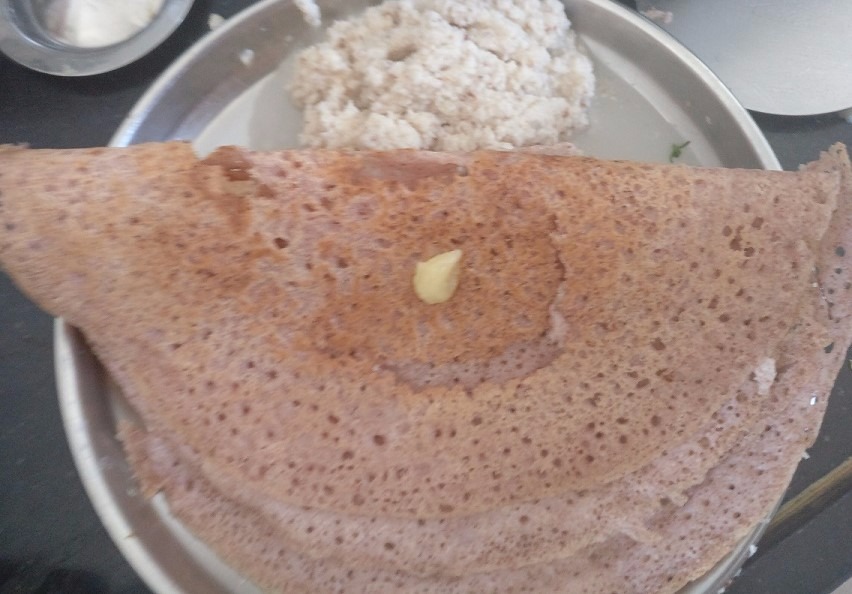
Jowar/Sorghum Dosa – Traditional gluten free dosa

Jowar is a healthy millet that can be a substitute for wheat if you are looking to go gluten free. Apart from the yummy Jowar rotis, you can also prepare Jowar dosa which kids will enjoy for breakfast. Read on further to find how easy it is to prepare this dosa.

Ingredients: 

The below quantity yields 6-7 dosas.

  1. Jowar/ Jola/ Sorghum – 2 cups
  2. Women’s Rice/ Poongar rice/ Idly rice/ Dosa Rice – 1/2 cup
  3. Urad dal – 1/2 cup
  4. Methi seeds/Fenugreek seeds – 1/4 spoon
  5. Salt as per taste
  6. Gingelly oil or any other cooking oil (Gingelly oil tastes best)

Method:

  1. Wash and soak jowar and rice together in a bowl minimum for 8 hours.
  2. Wash and soak urad dal and methi seeds in another bowl for 8 hours.
  3. Grind all the above soaked items to form thick paste.
  4. Allow it to ferment for minimum 8 hours.
  5. After fermentation, mix the batter well, add salt and water if required.
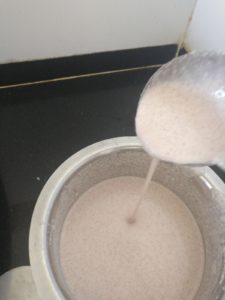
  6. The consistency of batter should be medium, neither too thick nor thin.
  7. Heat a iron tawa, smear gingelly oil, after sometime pour the batter starting from outer circle to inner one (This method ensures batter spread in uniform circle) and complete the circle.
  8. Add oil on the sides of dosa, cover a cook.
  9. Flip and cook on the other side.
  10. Serve hot with a dollop of desi cow ghee and onion chutney.

Neer Dosa- Traditional dish with Poongar Rice (Womens Rice)

neer-dosai

Ingredients:

  • Poongar / Women’s Rice – 2cups
  • Grated coconut: 1 cup
  • Thin Poha/Paper Aval – 1 handful
  • Coconut Oil – For greasing
  • Salt, Palm Sugar – As per taste
  • Ghee/Butter

Procedure:

womens-rice

    • Wash and soak women’s rice for 8 hours minimum.
    • Grind the rice along with grated coconut and poha to form smooth paste. The consistency of the paste should be slightly thinner than normal dosa batter.

consis-1

    • Keep the batter covered for fermentation for minimum 8 hours.consis-2
    • Now, check the consistency of the batter to be a bit more thinner than normal dosa batter, add water if required.
    • Now add 1-2 tsp salt and 1/2 tsp sugar and mix the batter well.
        • Now smear dosa tawa (preferably iron tawa, avoid non stick and induction tawas) with coconut oil using coconut fiber.

smear-with-coconut

      • Heat the tawa for 2 mins, now pour dosa batter starting from outer circle and ending with inner circle and spread it with laddle to make circle.

pour-batter-from-outer

    • Pour coconut oil little by little on the sides of dosa to complete the round and cover.

cover-and-cook

  • Once the dosa is cooked, flip the other side and cover.
  • Remove from tawa and serve hot with a dollop of desi cow ghee or fresh butter and coriander-mint chutney.

ready

Note: